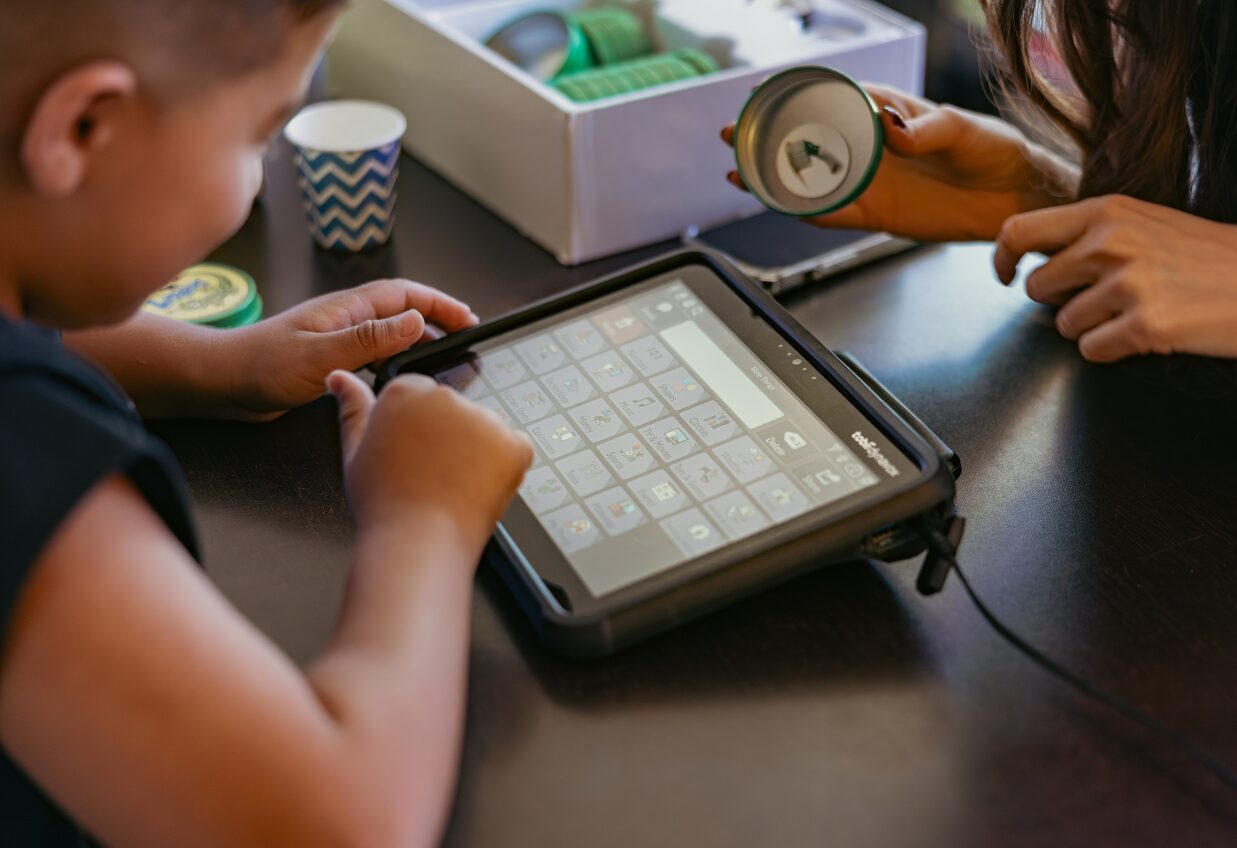
How to Select an AAC Device for Your Child
If your child is learning to use AAC (Augmentative and Alternative Communication), one of the biggest questions parents have is: How do we choose the right device? With so many options available, it can feel overwhelming. The good news is you don’t have to figure it out alone. Selecting an AAC device is a team process, guided by your child’s unique needs and strengths.
Step 1: Start With a Professional Evaluation
An AAC evaluation is the first step in finding the right communication system. A speech-language pathologist (SLP) trained in AAC will assess your child’s:
- Communication skills
- Motor abilities
- Vision and hearing
- Attention and learning style
- Sensory needs
This evaluation helps determine what type of system will best support your child’s ability to communicate independently.
Step 2: Consider Low-Tech and High-Tech Options
AAC devices range from simple to advanced. Some children begin with low-tech options like picture boards or communication books. Others benefit from high-tech speech-generating devices such as tablets with communication apps or dedicated AAC devices.
There is no “best” device for every child — the right choice depends on how your child can most easily and effectively express themselves.
Step 3: Match the Device to Your Child’s Abilities
Several factors influence device selection:
Motor Skills
Can your child isolate a finger to tap icons? Do they need a larger screen, keyguard, or switch access?
Language Level
Some devices offer basic picture choices, while others support full sentence building and advanced vocabulary.
Portability
The device should be easy for your child to carry and use in daily environments like home, school, and the community.
Sensory Preferences
Some children prefer certain voices, screen brightness levels, or tactile features. Comfort matters.
Step 4: Try Before You Commit
Many clinics and AAC specialists allow children to trial different devices. Trials help determine which system your child responds to best and gathers important data for funding requests.
This stage is about exploration and observation — what motivates your child? Which device encourages the most communication?
Step 5: Think Beyond the Device
The most important factor in AAC success isn’t the device itself — it’s how it’s used. A strong support system is key. Parents, teachers, therapists, and caregivers all need to model and encourage use of the device throughout the day.
Consistency and encouragement help AAC become a natural part of communication.
Step 6: Plan for Growth
Your child’s communication needs will change over time. The right AAC system should allow room for vocabulary expansion and skill development. Choosing a device that can grow with your child helps avoid frequent changes.
You Are Not Alone
Choosing an AAC device can feel like a big decision, but with the right team and guidance, it becomes a step toward giving your child a reliable voice. AAC is about connection, independence, and confidence.
If you’re wondering whether AAC could benefit your child or want help exploring device options, our team is here to support you every step of the way!