What Is AAC and How Can It Help My Child Communicate?
Imagine knowing exactly what you want to say but struggling to find a way to tell someone. Maybe you need help, want to join an activity, or have something exciting to share, but the words just aren’t coming out the way you want them to.
For children who have difficulty communicating through speech, everyday interactions can sometimes feel this way. But speaking isn’t the only way to communicate, and children don’t have to rely on spoken words alone to express themselves.
That’s where Augmentative and Alternative Communication (AAC) comes in. AAC gives children additional ways to share their thoughts, needs, and ideas, helping them participate more fully in conversations and everyday activities.
AAC Gives Children More Ways to Communicate
Augmentative and Alternative Communication (AAC) refers to tools and strategies that help people communicate when speaking is difficult or doesn’t fully meet their needs. There are two important parts to that definition:
- Augmentative communication adds to or supports speech a child already uses. For example, a child who can say some words might also use pictures to communicate more complex thoughts.
- Alternative communication provides another way to communicate when spoken words aren’t available or aren’t reliable enough for a child’s needs.
AAC doesn’t necessarily replace verbal speech. Many children use AAC alongside spoken words, gestures, facial expressions, and other forms of communication. The goal is to give your child more opportunities to communicate in whatever ways work best for them.
AAC Is More Than a Speech-Generating Device
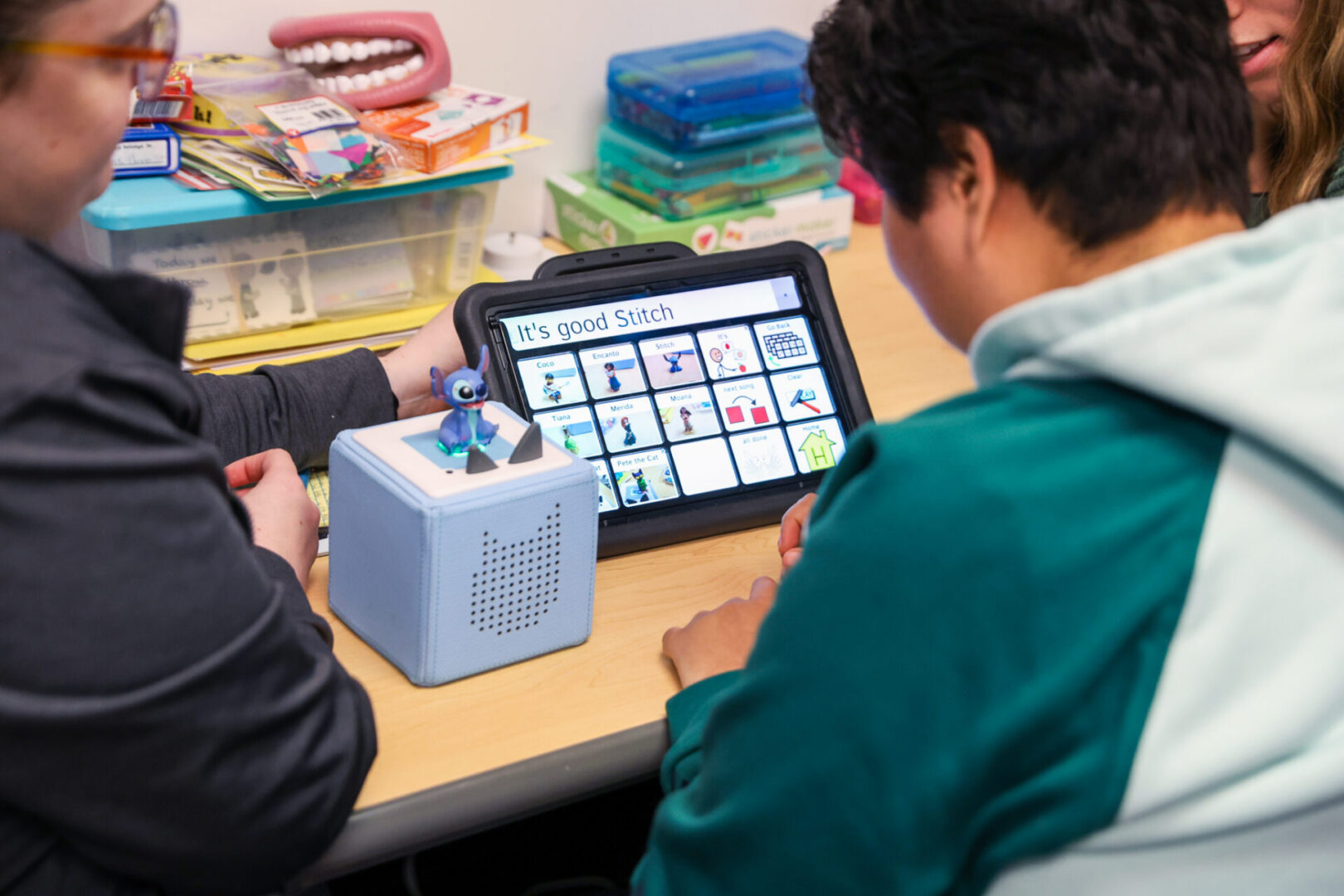
When parents hear “AAC,” they often picture a tablet or electronic device that speaks aloud when a child selects a word or picture. While these devices can be helpful, AAC includes many different forms of communication.
Examples include:
- Gestures and facial expressions: Pointing, nodding, waving, or using expressions to communicate.
- Sign language: Using hand signs to express words, needs, or ideas.
- Picture cards: Selecting or exchanging pictures to communicate.
- Communication boards: Pointing to pictures, symbols, letters, or words arranged on a board.
- Speech-generating devices: Using electronic tools that produce spoken messages when a child selects words or symbols.
Some AAC methods require no equipment at all, while others use printed materials or technology. Children may use several methods together depending on the situation.
Many Different Children Can Benefit From AAC
AAC isn’t just for children who struggle with speech. It can also help children who use some verbal speech but have difficulty communicating everything they want to say.
For example, AAC may benefit a child who:
- Uses only a few spoken words
- Has difficulty combining words into sentences
- Struggles to make their speech understood
- Understands more language than they can express verbally
- Has difficulty communicating consistently across different situations
- Needs additional ways to express thoughts, feelings, questions, or preferences
Children with autism, cerebral palsy, childhood apraxia of speech, developmental delays, and other conditions affecting communication may benefit from AAC.
However, a child doesn’t need a particular diagnosis to benefit from AAC. What matters is whether additional communication tools could help them express themselves more effectively.
Children Don’t Have to Wait to Start Using AAC
One common misconception is that children need to reach a certain age or master specific skills before they can begin using AAC. In reality, there is no universal minimum age for AAC. Even very young children can benefit from having additional ways to communicate.
Children also don’t have to demonstrate certain abilities, such as recognizing pictures, understanding cause and effect, or following directions, before AAC can be introduced. These skills can develop as children learn to use their communication systems with support.
Introducing AAC early can give children more opportunities to participate in everyday interactions while their communication skills continue developing. AAC does not prevent children from developing spoken language. For some children, it may even support speech and language development.
Finding the Right AAC System Starts with the Child
There isn’t one AAC system that works best for every child. The right approach depends on how your child currently communicates, what they want to communicate, and which tools they can use comfortably and consistently.
At Arbor Therapy, our speech-language pathologists provide individualized AAC evaluations to help determine which communication tools may be appropriate for your child.
During an evaluation, we consider factors such as your child’s language and communication skills, physical abilities, current communication methods, and everyday environments. We may also introduce different devices or communication systems to see how your child interacts with them.
Parents and caregivers are an important part of this process. We want to understand how your child communicates at home, what situations are challenging, and what you hope they’ll be able to express more easily.
Help Your Child Find More Ways to Communicate
Your child has thoughts, preferences, questions, and ideas worth sharing. AAC can give them more ways to make those messages understood.
If you’re wondering whether AAC could help your child, Arbor Therapy is here to answer your questions. Contact our team to learn more about AAC evaluations and how we can help your child communicate at home, at school, and in the community.